An AI chatbot for ecommerce is no longer a novelty bolted onto the corner of a checkout page—it's rapidly becoming the frontline of how online stores absorb support volume, recover carts, and protect margins. If your team spends its days answering the same handful of questions about order tracking and return windows, you're paying skilled humans to do work that automation now handles instantly. This article walks through the problem, what a real solution looks like, why the economics have shifted, and how a white-label agent like Aivastark fits into a modern storefront.
The Problem: Repetitive Support Is Eating Your Margins
Here's an uncomfortable truth most store owners already sense: the majority of your support tickets aren't complicated. Between 30% and 50% of customer-support volume is the same narrow set of questions—order status, return policy, sizing, and shipping windows—according to Aivastark's ecommerce customer profile. These are low-complexity, high-frequency queries that don't require judgment, empathy, or product expertise. They just require an accurate answer, fast.
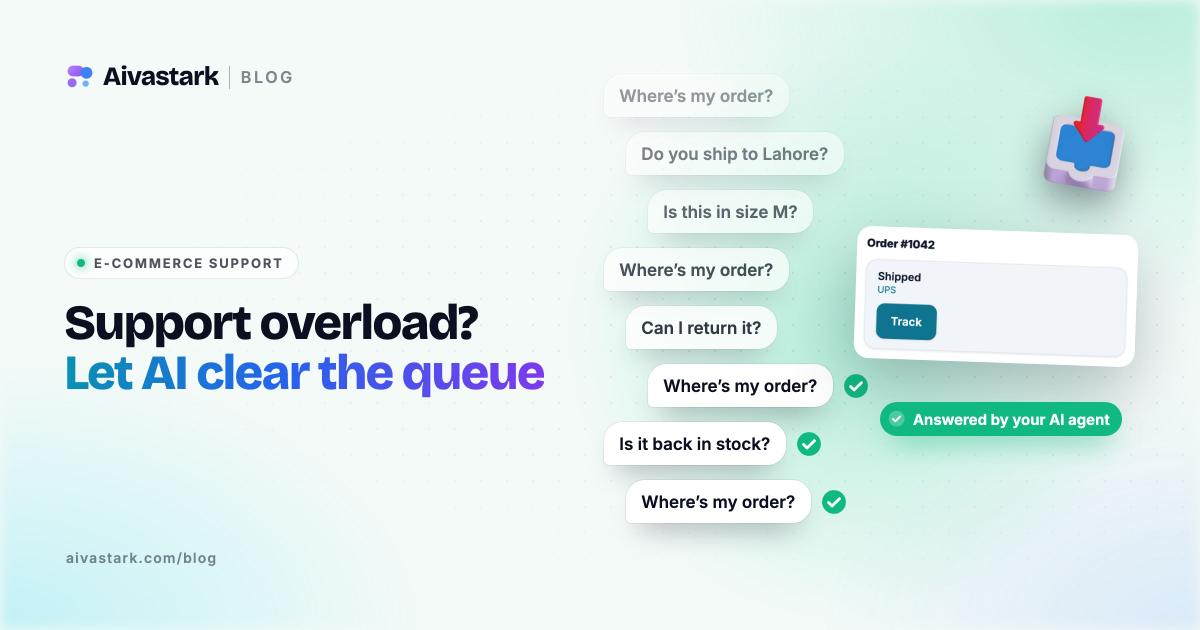
The single biggest culprit is WISMO—"where's my order?" For most online stores, WISMO is the largest ticket driver, full stop. It's the query that spikes during holiday seasons, floods inboxes after shipping delays, and consumes agent hours that could be spent on genuine problems.
And that's the real cost. Live agents are expensive, and spending them on routine, copy-paste answers is a poor allocation of a limited resource.
When a trained human is spending 40% of their day telling customers their package is "out for delivery," you're not running a support team—you're running an expensive tracking-number lookup service.
This isn't a fringe concern anymore. Roughly 31.4% of ecommerce businesses already use AI for customer service automation, per a breakdown of AI solutions for ecommerce problems. That number signals a competitive shift: stores that automate the repetitive layer free their humans to handle the complex, revenue-critical conversations. Those that don't keep paying full price for work a machine does better.
The Solution: What Good Support Automation Actually Looks Like
The instinct when adopting AI is to deploy it everywhere at once. Resist that. The stores that succeed do the opposite.
Start with your single biggest pain point
Don't try to automate discovery, forecasting, personalization, and support simultaneously. Identify your most costly operational problem and solve that one first. As a complete guide to AI in ecommerce puts it: if customer support is overwhelming your team, start with a chatbot. If stockouts are hurting revenue, start with demand forecasting. Focus beats breadth.
Audit and clean your data first
An AI agent is only as good as what it's trained on. Before evaluating tools, understand what data you have and how clean it is: your shipping policies, return flow, product catalog, and FAQ content. Contradictory policies, outdated shipping windows, or missing sizing charts will produce contradictory, outdated, and incomplete answers. Cleaning this foundation is the unglamorous work that determines whether automation helps or embarrasses you.
Deploy a widget trained on your real store
The practical form this takes is a chat widget trained specifically on your store policies, product descriptions, and returns flow—not a generic bot with canned scripts. When a customer asks whether a specific SKU ships to Canada, the agent should answer from your actual catalog and shipping rules, not a vague template.
Automate routine steps, route complexity to humans
The goal isn't to eliminate humans—it's to protect their time. The best implementations automate the routine steps while escalating genuinely complex tickets. Salesforce describes how agentic AI reshapes ecommerce support: with airline Air India, refund requests that once required multiple handoffs between teams are now streamlined, with routine steps automated and human agents freed to focus on higher-value interactions. That's the model—automation as a filter, not a wall. If you're weighing the boundary between the two, our guide on AI chatbot vs live chat unpacks where each still wins.
Why AI Changes the Economics of Ecommerce Support
Automation used to mean rigid decision trees that frustrated customers into demanding a human. Modern AI agents change the math entirely.
Advanced systems now resolve up to 80% of routine inquiries instantly, dramatically cutting ticket volume. The downstream effects are measurable on both sides of the ledger:
- Support costs drop by up to 50% while customer satisfaction (CSAT) climbs 38%—a rare case where cutting cost and improving experience move together rather than in opposition.
- One Shopify brand reduced support tickets by 72% in six weeks after deployment, per the same ecommerce AI analysis.
These aren't isolated wins—they reflect a market moving decisively. The AI-enabled ecommerce market is valued at $8.65 billion in 2025 and projected to reach $22.6 billion by 2032, growing at a 14.6% CAGR, according to ecommerce AI implementation statistics. When a category grows that fast, the question stops being "should we?" and becomes "how quickly can we do this well?"
Cutting support cost by half while raising satisfaction used to be a contradiction. AI made it a baseline expectation.
The economic argument is straightforward: every routine ticket an agent resolves instantly is an hour of human labor you don't pay for, a customer who doesn't wait, and a support queue that doesn't balloon on your busiest sales days.
Beyond Deflection: Turning Support Conversations Into Sales
Deflection is where most stores stop thinking about chatbots. It shouldn't be. The same conversation that answers "where's my order?" can also close a sale.
Chat becomes the checkout
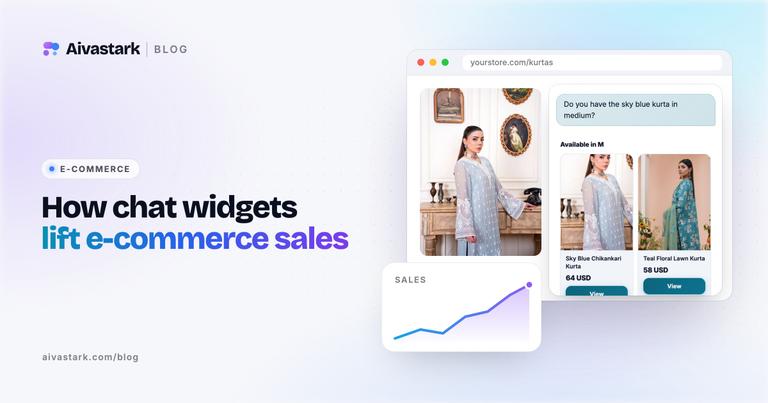
Chat commerce collapses the traditional funnel. Instead of pushing shoppers through category pages, filters, and multi-step checkout forms, the conversation itself becomes the path to purchase. As Aivastark's own breakdown of AI chat commerce from add-to-cart to checkout explains, the agent can carry a shopper from a product question straight to a completed order without ever leaving the chat.
Concierge behavior curbs abandonment
AI concierges do more than react. They curb cart abandonment, drive repeat purchases, and proactively trigger offers in real time. A guide on AI use cases and where to start describes agents that personalize experiences using both past and present behavior—nudging a hesitating shopper with a relevant offer at the moment of doubt rather than a generic discount email hours later.
The personalization payoff
The revenue impact is significant. AI personalization delivers conversion rate lifts of up to 23% and revenue increases of up to 40%, per the envive.ai statistics. That's the difference between a chatbot as a cost center and a chatbot as a growth channel.
The mindset shift matters most here. The retailers winning right now aren't the ones with the flashiest chat bubble—they're the ones treating every conversation as a chance to sell smarter, not just answer a question. Our deeper dive on how AI chat widgets increase ecommerce sales maps this out in more detail.
How Aivastark Fits: A White-Label Agent Built for Storefronts
Everything above describes the destination. Aivastark is one purpose-built way to get there for online stores specifically.
Built for the platforms you already run
Aivastark is designed for Shopify, WooCommerce, and BigCommerce stores. It's trained on your catalog, shipping policy, and returns flow, so answers reflect your actual business rather than generic templates. The full breakdown lives on the ecommerce industry page.
It handles the tickets that eat your day
The agent resolves the exact high-frequency queries described earlier—WISMO, sizing, refund eligibility, and international shipping—24/7. According to Aivastark's own data, it resolves 71% of support tickets without a human, which lines up closely with the 71% support-automation success rates cited across independent ecommerce AI research. Your support team then focuses on the tickets that genuinely need judgment.
One agent across every channel
Customers don't stay on your website. They message on Messenger, slide into Instagram DMs, and expect a WhatsApp reply. Aivastark runs one agent across the site widget plus inbound Messenger, Instagram DMs, and WhatsApp—all routed into a single inbox. No more "which channel was that on?" If omnichannel is new territory for you, start with our primer on what omnichannel customer support means.
Because it's white-label, agencies and store owners can present the agent under their own brand. If you're weighing whether to buy a ready platform or build in-house, our comparison of build vs buy AI customer support agents covers the real tradeoffs.
Getting Started: From Setup to Managed Service
The practical path is shorter than most teams expect.
Train, then deploy
Setup centers on training the agent on three things: your catalog, your shipping policy, and your returns flow. That data foundation—the same one you audited earlier—is what makes the agent accurate from day one. Clean inputs, reliable answers.
Onboarding measured in minutes, not months
This isn't a quarter-long implementation project. According to Aivastark's customer profile, most agencies onboard a client in under an hour. That speed changes the business case entirely—there's no long, risky ramp before value appears.
Bill it as a recurring service, not a one-off
For agencies, the strategic point is how you package it. Rather than a one-time build, an AI support agent is best sold as a recurring managed-service retainer layered on top of existing web or dev work. It becomes a durable revenue line rather than a project that ends. Agencies exploring this model will find our high-ticket AI agency service offerings guide useful for structuring the offer.
Map it to your store
The best next step is to see how the pieces fit your specific storefront. Explore the ecommerce solution page alongside the broader features overview to understand exactly which queries the agent can absorb and how it plugs into your channels.
The Bottom Line
Repetitive support is a solved problem. When 30–50% of your tickets are the same four questions and an AI agent can resolve up to 80% of routine inquiries instantly—cutting support costs by half while lifting satisfaction—the case for automation isn't speculative anymore. Start with your single biggest pain point, clean the data behind it, and deploy an agent trained on your real policies. Then push past mere deflection: treat every chat as a chance to recover a cart, answer a sizing doubt, and close a sale.
An AI chatbot for ecommerce built for your platform, trained on your catalog, and running across every channel your customers use isn't a luxury—it's how competitive stores now protect their margins and their customer experience at the same time.
Frequently asked questions
What percentage of ecommerce support tickets can AI handle?
Between 30% and 50% of customer-support volume is the same narrow set of questions (order status, returns, sizing, shipping), and advanced AI systems resolve up to 80% of routine inquiries instantly. Aivastark reports resolving 71% of support tickets without a human.
What is WISMO and why does it matter for ecommerce support?
WISMO stands for 'where's my order?' It's the largest single ticket driver for most online stores, spiking during holidays and after shipping delays, consuming agent hours that could be spent on genuine problems—making it a prime candidate for automation.
Does an AI chatbot for ecommerce save money or hurt customer experience?
Both improve together. Support costs can drop by up to 50% while CSAT climbs 38%. One Shopify brand reduced support tickets by 72% in six weeks after deployment.
How should a store get started with AI support automation?
Start with your single biggest pain point rather than automating everything at once, audit and clean your data (shipping policies, returns flow, product catalog, FAQs), then deploy a widget trained on your real store and route complex tickets to humans.
What platforms and channels does Aivastark support?
Aivastark is built for Shopify, WooCommerce, and BigCommerce stores and runs one agent across the site widget plus Messenger, Instagram DMs, and WhatsApp, all routed into a single inbox 24/7.
How long does it take to set up an AI ecommerce chatbot?
Setup centers on training the agent on your catalog, shipping policy, and returns flow. According to Aivastark's customer profile, most agencies onboard a client in under an hour—not months.
Sources