The customer support landscape is undergoing a fundamental shift, and agentic AI aivastark standard beyond chatbots is the new benchmark for modern businesses. For years, companies have deployed chatbots to deflect basic questions, but these tools have hit a wall. They break when faced with nuance, they forget the conversation after two sentences, and they often escalate issues that should have been resolved instantly. As we move into an era where customers demand immediate, context-aware, and autonomous service, the question is no longer whether to adopt AI, but which tier of intelligence will define your brand’s support experience.
The Limitations of Traditional Chatbots
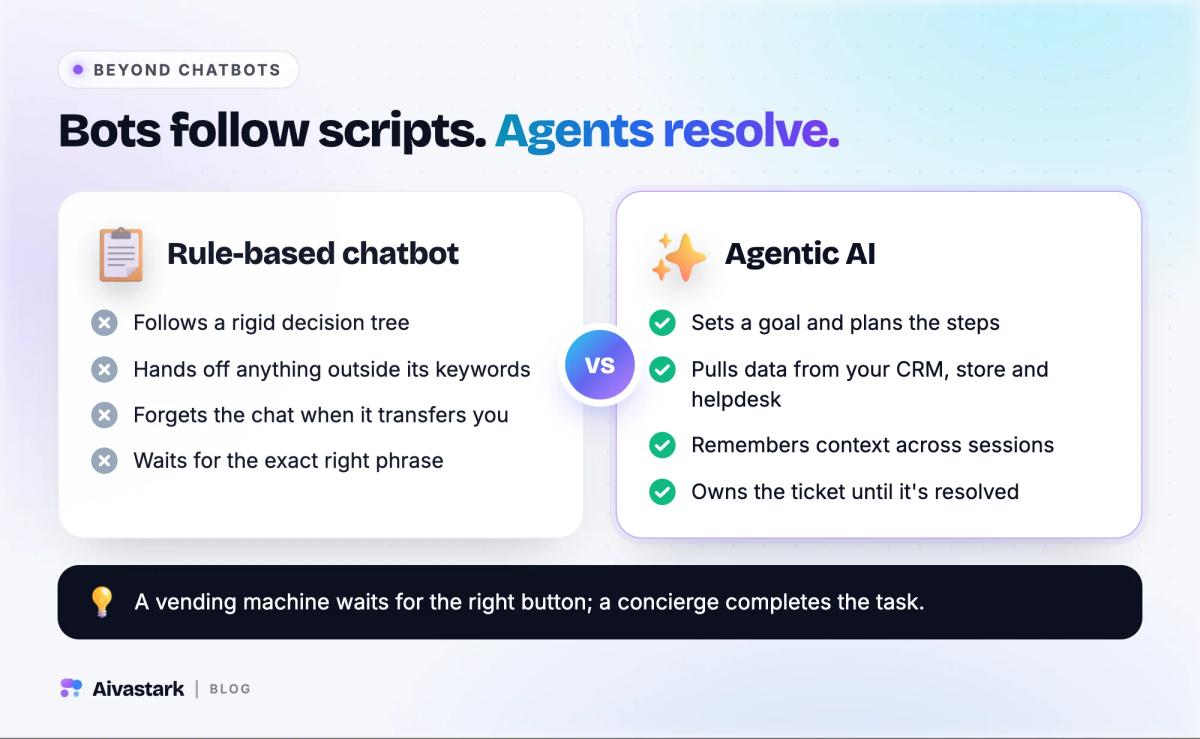
The first generation of customer support automation—rule-based chatbots—was a necessary step, but it was never a destination. These systems operate on rigid decision trees: if a customer types "track my order," the bot shows a link. If the customer types "I need to change my shipping address because I’m moving next week," the bot often responds with, "I’m sorry, I didn’t understand that."
High Escalation Rates and Repetitive Loops
Rule-based chatbots fail at the exact moment they are needed most. Because they rely on predefined scripts, any query that falls outside a narrow set of keywords triggers an immediate hand-off to a human agent. According to industry analysis, traditional rule-based bots can only resolve less than 30% of inquiries without human intervention. The remaining 70% are escalated, often with no context passed along, forcing the customer to repeat themselves.
This lack of memory is their critical flaw. A user who has already provided their order number and issue description in the first interaction will be met with a blank slate if they are transferred. The result is frustrated customers and overwhelmed support teams drowning in repetitive tickets.
No Autonomous Decision-Making
Beyond memory, these chatbots lack the ability to set goals or execute multi-step tasks. They cannot check inventory across multiple warehouses, initiate a refund while simultaneously updating a CRM record, or verify a user’s identity against a backend database. They are reactive, not proactive. They wait for the user to type the exact right phrase, and then they regurgitate a static FAQ. In a world where customers expect seamless, end-to-end resolution, this architecture is fundamentally broken.
What Defines Agentic AI and Why It Matters
Enter agentic AI—a paradigm shift from script-following to goal-achieving. An agentic AI system is not a chatbot in the traditional sense; it is an autonomous digital worker.
Proactive Intelligence and Multi-Step Reasoning
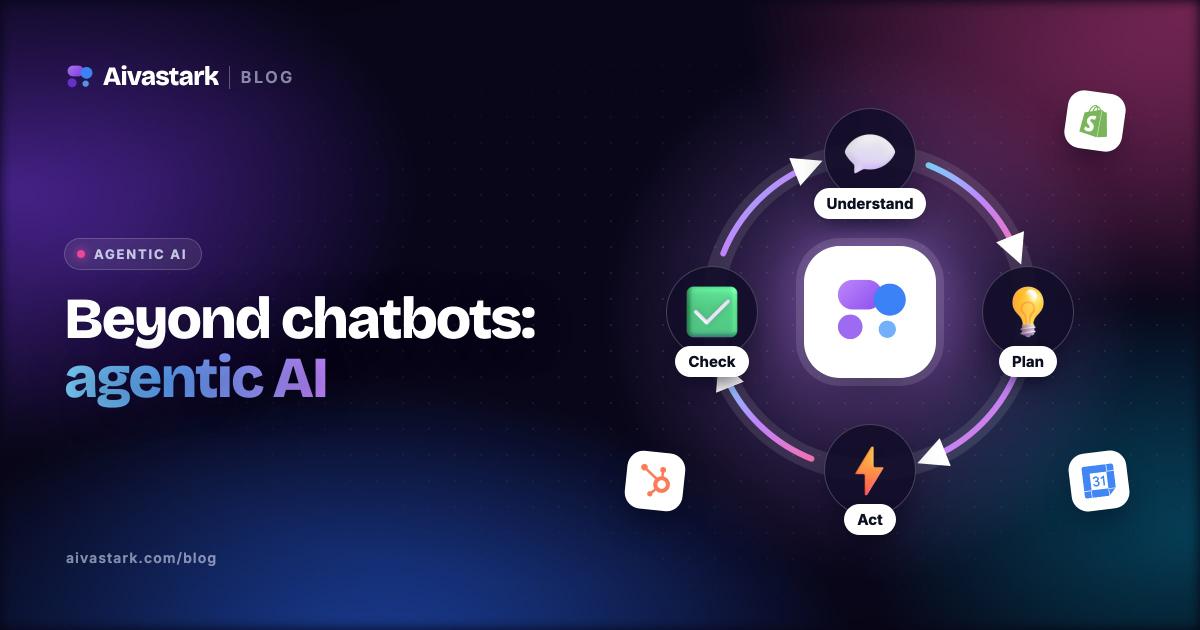
Agentic AI systems, like those powering aivastark , perceive the full context of a conversation, set an internal goal (e.g., "resolve this refund request"), and then plan and execute the necessary steps to achieve that goal without human oversight. This includes:
- Retrieving data from external systems (CRM, e-commerce platform, helpdesk).
- Verifying user identity through secure backend checks.
- Executing transactions like issuing a partial refund or changing a subscription plan.
- Taking ownership of the ticket until it is resolved, then summarizing the outcome.
This shift from reactive to proactive intelligence transforms how businesses handle complex support. A customer asking for a schedule change on an appointment across multiple time zones is not handed a link to a calendar; the agentic AI checks agent availability, validates the customer’s existing booking, updates the CRM, and confirms the new slot—all autonomously.
Contextual Awareness Across Sessions
Unlike traditional bots that reset with each new query, agentic AI maintains a persistent memory of the user’s journey. It knows if the customer is a VIP, if they have an open dispute, and what device they are using. This contextual awareness reduces friction dramatically. As one industry expert noted:
"The difference between a chatbot and an agentic AI is the difference between a vending machine and a personal concierge. One gives you what you ask for if you press the right button. The other anticipates your needs and completes the task for you."
How aivastark Embodies the Agentic Standard
aivastark is purpose-built to deliver this agentic standard, but with a critical distinction: it is a white-label platform. This means businesses can deploy a fully autonomous AI support assistant without the engineering overhead of building one from scratch—and they can brand it as their own.
Custom Knowledge Bases and Workflows
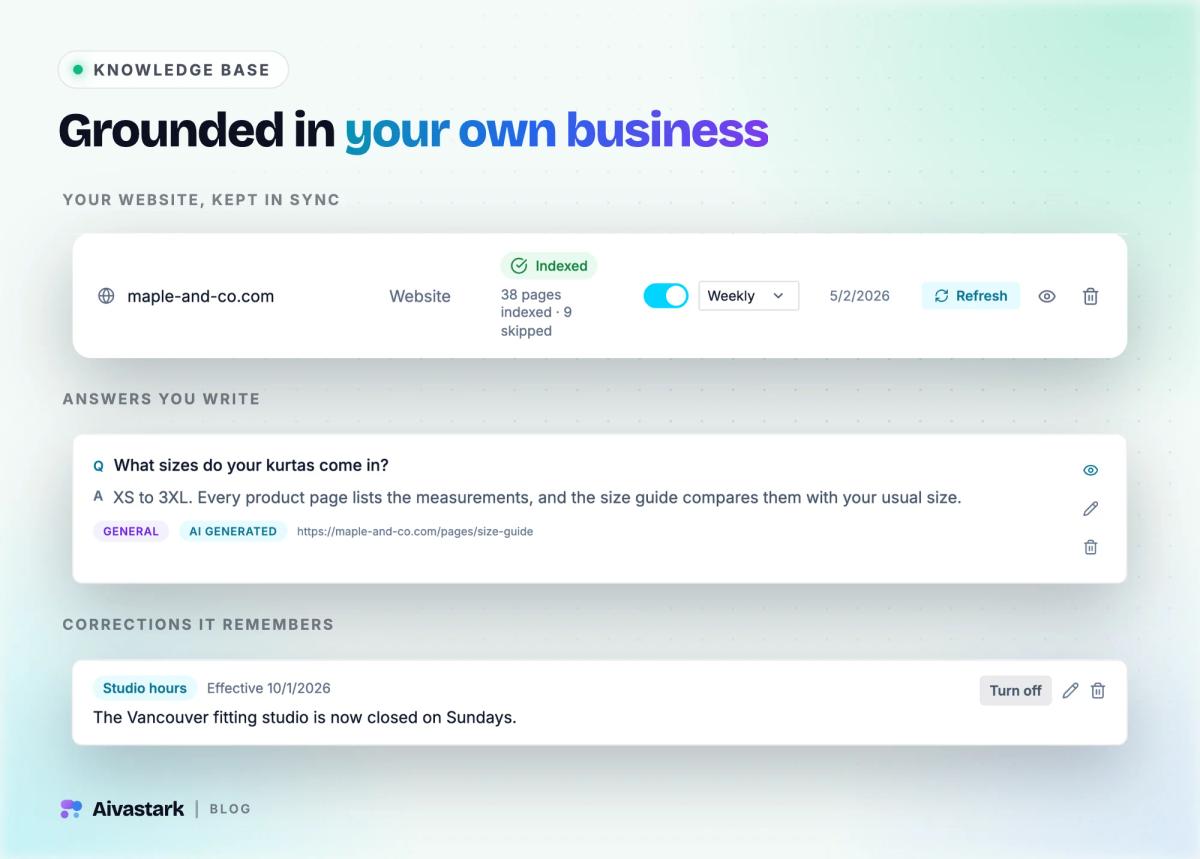
What makes aivastark unique is its ability to ingest a company’s unique data—product manuals, policy documents, CRM schemas, and historical ticket logs—to form a dynamic knowledge base. Unlike generic models that hallucinate or guess, aivastark’s agentic AI grounds its decisions in your specific business logic. You define the guardrails: the AI can issue refunds up to $200, but must escalate anything beyond that. It can change order details, but only within the first hour of purchase.
This is not a one-size-fits-all solution. For example, a dental practice deploying an AI chatbot for dental practices can have the agentic AI schedule appointments, verify insurance eligibility, and send pre-visit reminders autonomously. A legal firm using our AI chatbot for legal firms can have it intake client information, perform conflict checks, and draft initial case summaries.
Seamless API Integrations and Autonomous Execution
The true power of aivastark lies in its integration layer. It connects directly to your existing tech stack via pre-built connectors for platforms like Salesforce, Zendesk, Shopify, and HubSpot. When a customer requests a refund, the agentic AI does not just reply with text—it:
- Opens the order in your e-commerce system.
- Checks the refund policy against the customer’s purchase date.
- Processes the refund via the payment gateway API.
- Updates the ticket status in your helpdesk to "Resolved."
- Sends a personalized confirmation email.
This end-to-end autonomy means your human agents only handle the most complex or sensitive cases, allowing your support team to focus on high-value work. To see how this compares to building your own solution, read our deep dive on build vs buy AI customer support agents.
Real-World Impact: Efficiency, Satisfaction, and Scale
The transition from chatbots to agentic AI is not just a technological upgrade—it is a financial and operational one. The numbers speak clearly.
Cutting Support Costs and Handling Time
Because agentic AI can resolve multi-step issues autonomously, it slashes average handling time. Early adopters of platforms like aivastark report that their AI handles up to 80% of all inquiries end-to-end. This directly reduces the need for large, expensive human support teams. For a mid-sized e-commerce brand handling 50,000 tickets per month, diverting 40,000 of those to an autonomous agent can save hundreds of thousands of dollars annually in labor costs alone.
Context-Aware Interactions Boost CSAT
Customer satisfaction scores improve when interactions feel personal and efficient. Because aivastark remembers past conversations, it never asks a customer to repeat themselves. It can greet a returning user by name, reference their previous issue, and pick up where the last conversation left off. This continuous context reduces friction and frustration, leading to measurable improvements in CSAT and Net Promoter Score (NPS).
Scale Without Compromise
Unlike humans, agentic AI scales linearly. During a Black Friday sale or a product launch, your support volume can spike 10x. A human team would require weeks of ramp-up; an agentic AI handles it instantly, maintaining the same high-quality, personalized responses regardless of load. This operational flexibility is a key reason why businesses across industries are migrating. Learn how this applies to specific verticals like AI chatbot for ecommerce or AI chatbot for SaaS.
Overcoming Implementation Myths and Challenges
Despite the clear advantages, many businesses hesitate to adopt agentic AI due to persistent myths. Let’s address the two biggest concerns.
Myth: Agentic AI Is Too Complex for SMBs
There is a common belief that autonomous AI is reserved for enterprise teams with dedicated data scientists. Reality: aivastark’s no-code setup and pre-built integrations make deployment fast and manageable. You don’t need a Ph.D. in machine learning to get started. With our drag-and-drop workflow builder, you can define the exact scenarios your AI should handle autonomously—from password resets to complex order modifications—in minutes. We also offer a comprehensive FAQ section to walk through common setup questions.
Myth: You Lose Control and Compliance
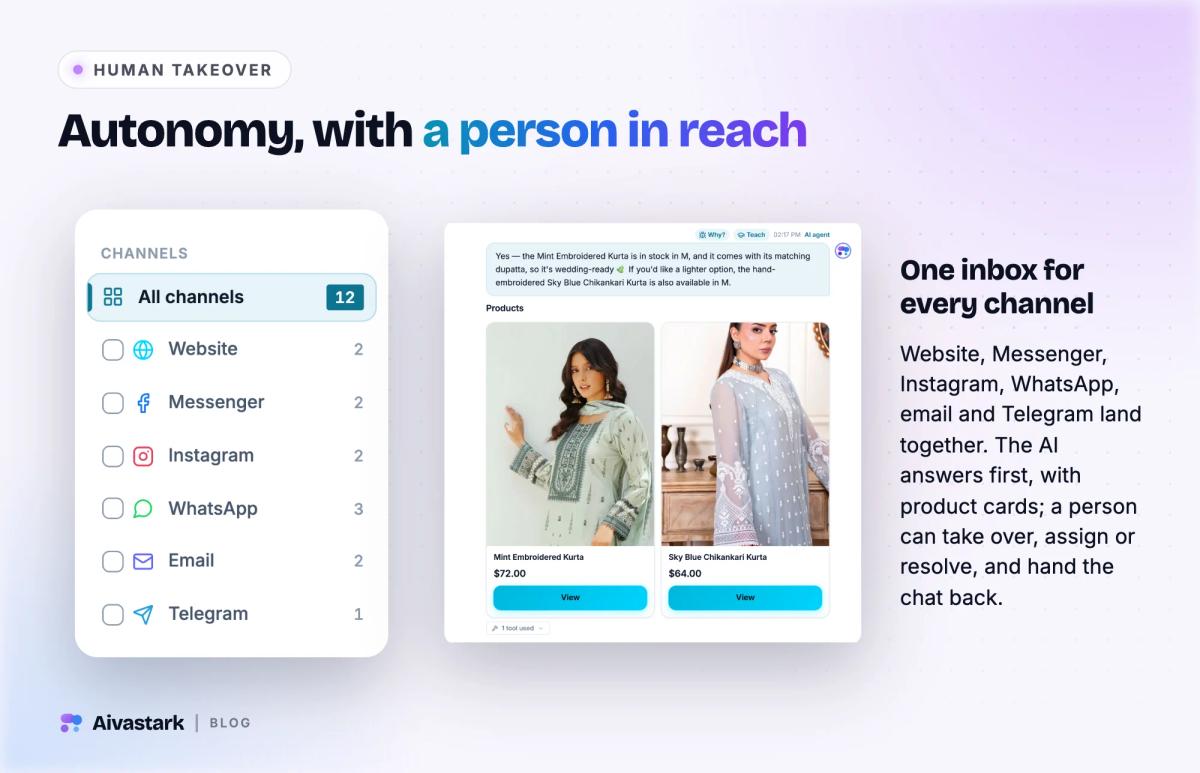
Businesses worry that an autonomous agent will go rogue, make unauthorized decisions, or violate compliance standards (like GDPR or HIPAA). Reality: aivastark provides robust guardrails, human takeover options, and full audit logs. Every action the agent takes is logged in a transparent audit trail. You can configure strict escalation rules—for example, the AI must hand off to a human for any request involving PII changes or financial transactions over a certain threshold. This balance of autonomy and oversight ensures you retain full control while reaping the benefits of automation. For a deeper understanding of the difference between these technologies, see our guide on AI agent vs AI chatbot: what's the difference.
The Future: Why Agentic AI Will Dominate Customer Support
We are standing at the inflection point where generative AI meets workflow automation. The agentic AI aivastark standard beyond chatbots is not a fleeting trend—it is the inevitable evolution of customer service.
Continuous Learning and Adaptation
Future systems will not just wait for updates; they will learn from every interaction. When an agentic AI fails to resolve a ticket and hands it to a human, it will analyze the human’s response and adjust its own future behavior. Over time, the AI becomes more sophisticated, handling a broader range of issues with greater accuracy. This creates a virtuous cycle: fewer escalations, better data for training, and happier customers.
The Competitive Edge of 24/7 Autonomous Service
In 2026, speed is the new currency of customer loyalty. Customers expect instant resolution, even outside of business hours. Enterprises that adopt agentic AI now will have a sustained competitive advantage. They can offer true 24/7 support that does not rely on an outsourced night shift, but on an intelligent, autonomous system that works tirelessly. This operational flexibility—combined with the ability to brand the experience as your own via aivastark—redefines what customers expect from a modern business.
The era of the simple chatbot is over. The standard has shifted to autonomous, context-aware, and proactive AI. For businesses ready to move beyond deflection and into true resolution, the path is clear.
Frequently asked questions
What is the difference between a traditional chatbot and agentic AI?
Traditional chatbots operate on rigid decision trees and reset context with each query, failing on nuance and requiring frequent escalation. Agentic AI, by contrast, sets internal goals, maintains persistent memory, and executes multi-step tasks autonomously—acting more like a personal concierge than a vending machine.
How does aivastark embody the agentic standard?
aivastark is a white-label, no-code platform that ingests a company's unique data (manuals, policies, CRM schemas) and connects via pre-built API integrations. It autonomously retrieves data, verifies identity, executes transactions (e.g., refunds, scheduling), and updates ticket status—all while being fully auditable and brandable.
Can agentic AI handle complex, multi-step inquiries?
Yes. For example, if a customer requests a schedule change across time zones, aivastark checks agent availability, validates the existing booking, updates the CRM, and confirms the new slot autonomously—without human intervention.
How does aivastark address security and compliance concerns?
aivastark provides robust guardrails (e.g., refund limits), human takeover options, full audit logs, and strict escalation rules for PII changes or large transactions. This ensures businesses retain control while benefiting from automation.
Is agentic AI only for large enterprises?
No. aivastark's no-code setup and pre-built connectors make deployment fast and manageable for small and medium businesses. The drag-and-drop workflow builder allows defining autonomous scenarios in minutes.
What measurable impact does agentic AI have on support operations?
Early adopters report that aivastark handles up to 80% of inquiries end-to-end, slashing average handling time and saving hundreds of thousands annually in labor costs for mid-sized businesses. CSAT and NPS improve due to personalized, context-aware interactions.